Last Updated on August 7, 2026
Introduction
Garment export order execution process in a garment manufacturing factory involves crucial apparel production steps. Garments production is a complicated business. It is a business path where so many guys have to perform to achieve targets. It is hard working track where every minute is counted. Someone have to pay more attention to executing all functions than any other business. It is little bit complicated, challenging and point oriented job. If someone does the task perfectly it is well and good, but if someone is having short of practical knowledge, lack of skill and careless attitude, the result cannot be imaginable. There has no option to show any inattention in this profession. They have to work in a time frame and achieve the target delivery date if we observe their job routine closely. In practice, order execution starts with buyer communication, approved sample management, raw material booking, production planning, quality control, and shipment follow-up. Let’s find a chronological sequence of garments orders execution process in the manufacturing factory.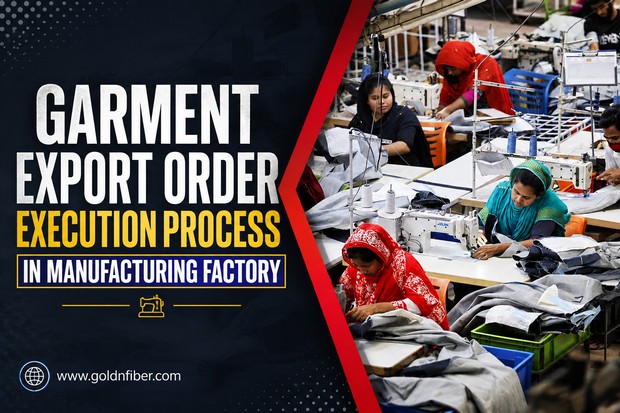
1. Inquiry of a Product
First of all, merchandising manager has to contact the buyer representative and send their profile. They should also review the buyer’s tech pack, size chart, construction details, artwork, and labeling requirement before moving to sample development. They also assure them of making buyer required sample or offer their self-made sample or collect the product from the buyer and inquiry the product including all technical issues. Besides this, should make a swatch card and bill of material sheet with rough consumption for sourcing material suppliers. A clear approval route for lab dip, strike-off, and sample comments should also be fixed at this stage.
2. Lead Time/Space Availability
Lead time is duration from order placing to receive the finished goods. This channel is included value chain model to supply chain management. Vendors are bound to hit buyer lead time. Otherwise, claim will be imposed because; buyers anticipate the demand of product sale via survey or point of sale order. That’s why warehouse is being pre-booked. So, buyer is compelled to pay the rent of warehouse. That’s why buyer imposes the claim as compensation if vendor fails to hit the lead-time. Lead time should also include sample approval time, raw material booking time, factory capacity, finishing, and shipment booking, because even a small delay in one step can affect the final delivery date. The factory should also check line capacity, warehouse space, and finishing space before accepting the delivery schedule. Lead time management is one of the most critical parts of the garment export order execution process because delayed materials, sample approvals, or production capacity can affect the shipment date.
3. Costing
Costing of garments is a necessary task for RMG merchandiser, especially in soft-line. Overall chance of getting order and profit depends on it simultaneously. Usually, costing is an attempt to calculate the total cost of production of finished goods. Costing is done considering below parameters-
- Cost of all materials like fabric, accessories, packaging items
- Cost of production (CM)
- Cost of other items like printing, washing, embroidery, heat-seal, import tax etc. A practical costing should also include wastage allowance, freight, bank charge, duty, and profit margin so the order remains commercially viable.
4. Order Confirmation
Buyer releases the order confirmation after some fair bargaining and many stages of sampling in comparison to other vendors. Buyer confirms the order via providing the master LC to vendor. Costing and sample are very vital for clinching orders defeating the competitors. The order is usually considered safer when the buyer’s approved sample, signed comments, and final delivery terms are matched with the purchase confirmation.
5. Purchase Order (P.O)
Buyer provides the purchase order to the vendor. Purchase order form is consists of style name, fabric, accessories, layout of trims, carton measurement, FG destination, retail link bridge instruction, shipment booking instruction, washing instruction, packing instructions, poly bags details etc. Before booking anything, the merchandiser should compare the P.O. with the tech pack and the approved sample to avoid mismatch in packing, labeling, and shipment instruction.
6. Guarantee of Payment
Payment is determined via some ways like L/C or T/T, F.C.A (Foreign currency account) is required to do the task smoothly. USD is the currency to exchange remittance in international business. F.C.A is an Incoterm, not a payment method, so payment term and delivery term should be checked separately in the sales contract. In export business, documentary payment terms such as L/C, T/T, or cash against documents are agreed according to buyer and seller risk.
7. Fabric & Accessories Booking
Some textiles produce different sorts of fabrics like solid dyed, yarn dyed, printing and microfiber. Fabric is booked after scrutinizing the consumption via size wise and color wise. Greige booking (unbleached thread) is first if having a big order. By greige booking, we can minimize fabric suppliers lead time. We have to consider the price, qty, and lead-time as well as payment term while booking the fabric. Fabric booking is always important as it needs long lead time than accessories booking as it needs short lead time. So first, ensure fabric booking then place order for accessories. For dyed, printed, or washed items, lab dip, strike-off, shade band, and testing approval should be completed before bulk booking.
8. Back to Back L/C
Garment industry places the order to fabric and accessories supplier after getting the order from the buyer. They receive the Master L/C. In addition, they place the back to back L/C against master L/C. Back to back L/C could be 80% in comparison to master L/C not more than that. This percentage is regulation-sensitive and should be verified against the latest bank and Bangladesh Bank guidelines before opening the L/C.
9. Sampling
The procedure of developing or making sample is called “Sampling.” It’s a vital part to satisfy the buyer. A fascinated sample can change buyer’s motive and enhance more opportunity to increase relationship. Please find some narrative discussion regarding sample development: Each sample stage serves a different control point, so comments should be tracked carefully and closed before bulk production.
a) Proto Sample
Proto sample is the first and foremost sample. It is made at the initial stage. Sometimes it is made of available fabric with available accessories, and the vice versa is true. Vendor makes recap sample after getting comments on proto sample. Proto sample is usually used to check the design idea, basic construction, and fabric appearance before further development.
Purpose
The purpose of the sample is to check workmanship and measurement deviation. It also helps the buyer understand whether the style can be made with the planned fabric and finishing method.
b) Fit Sample
Fit sample has to make by vendor after order confirmation. The vendor may make it of available fabric and accessories. Fit sample is normally tried on a live model or fit form to verify comfort, silhouette, and body balance.
Purpose
The primary objects of these samples are to check the fitness or measurement of the garments by buyers. Any fitting issue found here should be corrected before the next sample stage, because the same mistake can repeat in bulk production.
c) Pre-Production (P.P) Sample
Pre-production (P.P) samples are made after order confirmation. It must be done by the vendor by actual fabric and accessories to get approval before step into bulk production. Once PP Sample inspected by the respected buyer, one piece pp sample kept by buyer and another one pp sample have to send to vendor after tagging. If the product has embroidery, print, wash, or special packing, those approvals should also be frozen at this stage.
Purpose
P.P sample is a basic sample which is made in sample room to do bulk production and buyer must follow it if arise any technical problem. It is also the best stage to freeze trims, machine settings, seam allowance, and construction details before bulk starts.
d) Size Set Sample
Usually, size set sampling is done immediate before step into bulk production. S.M.L.XL.XXL these are common sizes. It can vary depending on wearer consumer’s sizes and age group. Basically to check the measurement and grading this is pre-requisite for production. This is done solid color assorted sizes or mixed color assorted sizes. These samples are made in the production floor for PP meeting or internal purpose. Size set sample also helps confirm that grading is consistent across the full size range.
Purpose
Size set sample helps to improve pattern and production floor will get a common idea for smooth production. It also reduces the chance of size variation after bulk cutting and sewing.
e) Production Sample
Production sample is made the initial stage of running production Buyer can estimate how the production is going on. This sample is collected from bulk floor. Production sample is often sent to confirm that the bulk quality is matching the approved PP sample.
f) Garments Test Sample
Garments Test Samples are collected from the production floor while bulk production is going on and must be tested in buyer nominated lab. Common lab tests may include colorfastness, shrinkage, seam slippage, pH, and restricted substance checks, depending on the fabric and buyer requirement.
Purpose
Samples need to be tested in testing house to make sure that the garments do not contain harmful elements. Test results also help the buyer confirm that the fabric and accessories meet the required safety and performance standard.
g) Shipment Samples
Shipment sample needs to send buyer before arranging departure and but it is not always mandatory. Many factories keep one sealed approved shipment sample as a reference for future claims or repeat orders.
Purpose
By these samples, buyer can compare the production sample with the shipment sample. This is also useful if there is any dispute about color, measurement, labeling, or packing later.
10. Fabric & Accessories in House
Vendor should check with material suppliers to ensure all fabrics and accessories in their hand to keep the production schedule. Production line might be hampered due to insufficient or wrong materials. Materials should be stored by lot, shade, and size ratio, especially when the order has multiple colorways.
11. Inspection of Materials & Report Making
All efforts might be in vain due to wrong, defects or low-quality materials. So, carefully check the quality & quantity of all fabrics and accessories in house. TQM and AQL are required to improve the factory quality section. After reviewing a report is made with the test data. After checking if found any defect or shortage of materials, knock the material supplier to replace as early as possible. Checking should cover quantity, shade variation, fabric width, GSM, branding, and packaging condition before releasing materials to production. Accessories like zipper, button, snap, and label should also be checked for strength and appearance if they are part of the order.
12. Pre-Production (P.P) Meeting
P.P meeting is required just before going to the bulk production. Approved P.P sample, approved mock-up, full worksheet and all other swatch cards need to present before arranging this meeting. All technical points and issues need to be described clearly to production people. All impotent concern person related to the production have to attend this meeting. It is conducted by the following person-
Factory Merchandiser
Factory QC
Buying House merchandiser
Buying House QC
Pattern Maker
Cutting in-charge
Production Manager
Sample man
Store in-charge
Technician
Finishing guy
Maintenance guy
This meeting should also confirm machine attachments, operation sequence, critical quality points, thread and needle specification, and the responsibility of each department.
13. Pattern & Marker Making for Bulk Production
Pattern
Pattern making process is mainly done by two ways. Pattern is a hard paper which is made by the following each individual component for a style of garments. The whole design which is manual is drawn on manila board. This is one sort of hard paper. On the other hand, automatic pattern is created via computer software like Gerber Accumark. Consumption is come out via pattern. Basically, pattern design is made based on the middle size of the wearer from purchase order size ratio. If sizes are like S, M, L > pattern needs to be made based on M size. Sometimes we have to send the paper pattern with the garments to buyer. Today, many factories use CAD systems such as Lectra or Gerber AccuMark for pattern grading and marker planning because they reduce manual error and save fabric. The base size should be decided from the buyer-approved size chart before marker planning starts.
Sewing Pattern
Sewing pattern is accurate measurement wise cut piece to help in sewing individual portion or panel. What will be sewing allowance it can be known by sewing pattern? It also helps to keep seam allowance, notches, and drill marks correct during sewing.
Marker
Marker is created and printed in all parts of the wears in all sizes for bulk production. Marker is a thin paper which contains all components of different sizes for a particular style of garments. Measurement grading is applied in all sizes markers like S.M.L.X.XL.XXL to reduce fabric consumption. Single marker contains only one size, but mixed marker contains many sizes to minimize fabric usages. Higher percentage of marker may secure your production line. Multiple markers are applied to enough fabric, but single marking is done if fabric exists minimal. Leuctra and Garber both are the popular marker machines. Sometimes buyer wants digital mini marker for the wearers. Marker planning should also consider grain line, nap direction, stripe or check matching, and print placement. Before bulk cutting, marker efficiency and fabric width should be checked carefully because poor nesting increases wastage and cost.
14. Production Line Set-up
Production line set-up is the arrangement of sewing machines where sewing machines are set up chronologically for smooth production of a particular style. Even nice sequence of sewing machines set up may increase daily production. Line balancing, operator skill, machine attachment, and SMV should be considered so the line does not face bottlenecks.
15. Trial or Pilot Cutting
This is test cutting to check or measure the overall SMV, production processing, machine adjustment, workmanship, technical problem or efficiency and production cost. Small quantity (like 100 to 300 prices of garments) of fabric is cutting for initial checking. Trail cutting required before step into bulk cutting. It will smooth and secure bulk production. This step is also useful for checking shrinkage, panel matching, cutting accuracy, and whether the approved marker fits the actual fabric width.
16. Bulk Cutting
If trial cutting is done and garments are passed from production line by QC, then bulk cutting may proceed to expedite manufacturing process. Fabric relaxation, shade segregation, and ply control should be maintained before bulk cutting to avoid panel variation.
17. Numbering, Bundling & Sorting
Numbering, Bundling, and sorting process are done once bulk cutting executed. Then cut pieces have to send for cut panel checking. The bundle plan should keep size ratio, shade, and sequence in order so the sewing line receives the correct panels without mix-up.
18. Cut Panel Checking
Q.A guy has to check each part visually to find out fabric defects. Good pieces are sent to the production line, and defect pieces need to keep for reporting. Defect pieces have to replace by cutting section. The panel should be checked against the pattern and not only by eye, because missing notches or wrong cut points can create sewing defects later.
19. Sewing
Different sorts of sewing machines are used in the production line to amalgamate cut panel attachment for making the whole garments. As bulk production is a chain process, so sequence of sewing machines set up is very necessary to expedite sewing functions. Inline quality inspection during sewing helps catch defects early and reduces rework in finishing. Common sewing defects such as skipped stitch, broken stitch, puckering, and seam twist should be monitored at this stage.
20. Table Inspection
Table inspection is required to minimize quality fault in finished goods. Here, all garments are checked very carefully by QC. Aero-plane system is one of the modern quality checking system. In some factories, this is done through a moving-table or one-piece flow inspection method to catch defects earlier. Many factories also use end-line checking or spot checking depending on the product and target quality level.
21. Finishing
Finishing includes ironing, packing, cartooning etc. It is accomplished immediately after production (non-wash garments) or washes (washing clothes). Cutting uncut threads, dirt removal, draw cord placement checking. Finishing is including pressing and packing the poly bags or blister and racking inside cartoons. After pressing, garments should also be checked for measurement, stains, loose thread, label position, ticketing, and metal contamination if required by the buyer. Carton assortment, size ratio, and buyer’s packing ratio must also be checked before final packing.
22. Inspection
Pre-inspection is done by factory QC. Quality department people check the wearer attentively. This internal inspection should follow the approved specification, workmanship standard, and buyer comments sheet before the goods move to final inspection. Using a buyer-approved AQL plan helps the QC team judge whether the lot can pass final inspection.
23. Final Inspection
Buyer representative conducts final inspection. Vendor must rectify the drawback if buyer QC finds any discrepancy or fault in wearer. Sometimes buyer nominated Quality inspects the goods directly or buyer urge to do 3rd party inspection entities like ITS, BUREAU VERITAS, SGS, and INTERTEK. The buyer inspector usually compares the bulk lot with the approved sample, spec sheet, and packing approval before clearing shipment. The factory should keep the approved sample, packing ratio, labeling, and carton details exactly aligned with the buyer’s final approved documents.
24. Delivery
If everything is OK, then supplier sent the goods to the buyer. Always try to hit the target delivery date to erase hassle. Follow up with the customer in respect of shipment and informing him shipment details. Quick response and follow up in respect of any of the buyers query may enhance relationship to grow up business. At dispatch, the supplier should share invoice, packing list, shipping marks, carton count, ETD, and transport details with the buyer for smooth follow-up.
Conclusion
The garment export order execution process requires close coordination among merchandising, sourcing, sampling, production, quality, finishing, and shipping teams. From buyer inquiry to final delivery, every step must follow approved requirements, planned lead time, and quality standards to ensure on-time shipment and buyer satisfaction.
Frequently Asked Questions (FAQs)
Q1. What is garment order execution process in manufacturing factory?
Ans: It is the step-by-step flow from buyer inquiry and costing to sample approval, material booking, production, inspection, and shipment. Each stage should be completed in sequence so the order can move without delay or rework.
Q2. What is PP meeting in garment factory?
Ans: PP meeting means pre-production meeting. It is held before bulk production to review the approved sample, pattern, marker, trims, machine setup, and quality points so the production team can follow one clear instruction.
Q3. Why is trial cutting important in garment manufacturing?
Ans: Trial cutting checks whether the marker, fabric width, and cutting plan are correct before bulk cutting starts. It helps catch shrinkage, alignment, and workmanship issues early, which saves fabric and production time.
Q4. What documents are needed after a garment export order is confirmed?
Ans: Usually the factory works with the purchase order, approved sample set, payment term or L/C, and packing instruction after confirmation. Before shipment, invoice, packing list, shipping marks, and transport documents are also needed for smooth dispatch.
Q5. How can garment factories reduce lead time and fabric wastage?
Ans: Lead time can be reduced by freezing the sample early, booking materials on time, and balancing the production line properly. Fabric wastage can be reduced with careful marker planning, shade segregation, and controlled bulk cutting.