Last Updated on June 1, 2026
I got frequent requests from my respected readers. Most common request is how to find new buyers and how to get more order for apparel business? How to gain more efficiency, more profit margin and run a sustainable business in the present context? They wish to learn the business development strategies for apparel manufacturers and textile industries. Today I am going to deliver some proven tactics to gain more new orders.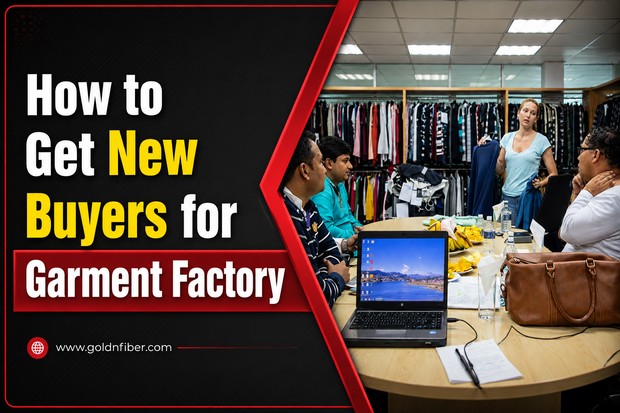
How to Find New Buyers and Get More Orders for Apparel Business
1. Be visible
In the present context apparel manufactures need to be visible through online and offline platform all together. Covid-19 taught us the importance of online platform. You can get more order by increasing online presence. User-friendly e-commerce website, dynamic use of social media platform delivers a competitive advantage and reaches new customers. Robust digital marketing can drive new traffic to your e-commerce site that can boost selling. Listing your factory on B2B platforms like Alibaba.com or Made-in-China also brings in buyers who are actively searching for manufacturers.
Online presence and digital visibility
Visiting trade shows is another way to get new orders but regret to say some manufacturers never care it. They think it’s one sort of waste of time and money. Their mind set need to be reset. Manufacturers need to be visible in the retail market by participating trade shows and online platform considering most effective and costly strategies. Though it costly but results may not visible instantly, keep patience to get it over the next few months.
Trade shows and buyer exposure
As a manufacturer develop different sort of sample to showcase your products for visitors and make a smart factory profile to deliver buyer’s. Many buyers get ready to find suitable manufacturers are through attending trade shows at one rooftop. If you miss the opportunity, then you’re not on the buyer’s radar. After the trade show buyer will analyze all factory profile to find suitable production plants. So keep ensure maximum visibility to get new buyers for your production plants. Research shows 83% of fashion buyers use trade shows specifically to find manufacturers that fill gaps in their supply chain, so showing up with a strong profile puts you right in front of active demand.
2. Product diversification
It is a smart way to grow a sustainable business. By this you can find new buyers and get more order for apparel business. This strategy can enhance your product range to increase sales and profitability that will improve business opportunity. Suppose currently you have a garments production unit. You can establish a new sweater, backpack, cap or shoe production unit to attract new buyers. Buyer always like to pick all items from one umbrella because it will reduce lead time and procurement cost. So try to diversify your product line to get optimum results. Before investing in new machinery, develop a few samples in the new category and test buyer interest at your next meeting first.
3. Be flexible
Most of the garments factory desire big and continuous orders from the buyer end to run their production line smoothly. But it couldn’t always be happen as per their expectation. Please be noted that 80% of buyers are small and medium scale brands. They have to go through with some limitations. Thus sometime you have to be flexible to receive small orders to build strong relationship with the buyers. You should remember small orders can bring big orders.
Flexible order quantity and MOQ strategy
Factory should have the flexibility to produce large and small quantities as per buyer’s requirement. If you work with different buyers, then changing order quantities may not impact upon you much.
For short and quick runs orders, buyer becomes anxious and very generous. Thus they often offer a premium price. If you are become flexible to continue small orders, it will grow factory goodwill. As a result, most buyers want to work with you that will enhance your opportunity to become big. Lean sigma management system is a smart tool to expedite such kind of small orders. Lean can eliminate bottlenecks, reduce lead times, and enhance overall productivity. Factory should understand such kind of market trends. Dedicating one line for small-batch orders with a fixed minimum, say 300 to 500 pieces per style, keeps your main production smooth while still serving smaller buyers.
4. Easy to adopt
Computerized automation is essential for sustainable development. We know garments making is a labor based business. But in the 4th industrial revelation garments industry may be fall in risk. Industry owners have to reduce manpower due to the technological advancement and the customer’s own choice. Fast fashion, zero carbon emission, direct to consumer; cut the middleman out four parameters will work simultaneously in near future. Industrial owners should empathize on update technology; adopt hi-tech computerized machinery and create strong raw materials sourcing funnel to increase more production by reducing cost and manpower. Apparel manufactures should mentally be prepared to adopt new technology. Otherwise they can’t survive in the coming adverse situation.
Green energy and sustainable production
Emphasization on green energy solutions is another way to reduce carbon footprint. Enlarge of renewable energy can create good impact upon buyer. Eco-friendly production process can reduce manufacturing costs and improve brand image. Nowadays consumers are very conscious regarding environment issues. According to PwC’s 2024 Voice of the Consumer Survey, consumers are willing to pay 9.7% more for sustainably produced goods, making green production a real business advantage. Thus you have to give priority to use recycled materials and natural resources.
5. Know the trends
In the current context right information is the power which can keep you ahead from other competitors. Thus you should employ a smart R&D team to visit-survey, scrutiny and examine retail market frequently to analyze market trend and customers option and take right actions for rapid changing trends to achieve your targets. Factory development team should visit international trade fair, study and research leading fashion magazines to know the upcoming trends as well as what inspires the customers. Sourcing team has to enhance sourcing capabilities of high quality fabric and trims to develop different look, shapes and color, designs sample.
Trend analysis and sample development
Most of the garment manufacturers do not have such kind of special team who can collect new information of human fashion trends, latest colors, shapes and designs. If a full R&D team is not possible yet, assign one merchandiser to track platforms like ASOS, Zara, and Pinterest weekly and note what colors, silhouettes, and fabrics are trending. Factory meeting room should decorate different lucrative and trendy samples. During buyer meeting, show your latest samples with competitive price instead of offering old designs. It will ensure your proactive attitude that will enrich your business opportunity. Never think on short-terms, increase your radius and make investment plans by focusing on returns five years down the line. The target is to achieve economies of scale, while being cost-effective.
6. Focus on skilled worker
Efficiency is the key point to get success. Focus on your workforce for scaling because they are backbone of the industry. Arrange regular training program to ensure that your employees are getting skilled and adaptable with new technologies and trends. So recruit high skilled worker and train up existing manpower for improvement of production process and innovative solutions. Skilled manpower can easily sort out urgent issues; eliminate bottlenecks, reduce lead times, reduce waste, improve product quality and production efficiency. You can get more value-added services by optimizing your operations and workforce. Cross-training operators on adjacent machines is a simple way to reduce dependency on any single worker and keep production moving during absences.
7. Develop brand identity
Emphasizing brand identity is essential to run a successful apparel business. You may get numerous benefits by creating a strong unique brand identity. It’s not just about creating a logo and tagline; it’s about defining what your brand represents, future aspects and the story it tells. Brand identity is one sort of invisible goodwill that is crucial in scaling up your garment manufacturing business. Regarding brand positioning it is very hard to keep consistency in a crowded market. Visual elements include the logo, typography, color scheme, and imagery of a brand is also critical to establishing brand identity. Pay attention to research and development team for new innovation. Individual brand identity can deliver you a competitive market place in the versatile world and build a loyal consumer base that will enhance your brand recognition and long-term success. For manufacturers, brand identity also covers how buyers see your factory before they visit, so a clean company profile on LinkedIn and a professional factory brochure both matter.
8. Data driven market research
In the current era data is considered as goldmine. Right data can give extra preference that you can’t imagine. Proper market research can boost up your business. Market reach is essential to grab new market and scaling up production. Thus garment manufacturers have to do market research to identify new sales funnel, upcoming opportunities and customer segments to open new window. To get accurate real time data factory should use ERP software to analyze material procurement, stock assessment, production, sales, profit margin, forecasting, customers demand and waste control etc. If full ERP implementation feels overwhelming, start with just inventory and production tracking and expand the system gradually once the team is comfortable.
Conclusion
In a nutshell we can say to scale up keep high quality, keep consistency and run with data driven analysis! I think this plan of action can lead a successful business. To run a sustainable apparel business a manufacturer can follow above strategies to gain optimum results.
If this article helped you to learn something new then do comment and tell us your favorite part. So what are you waiting for? Share this insightful blog with your friends and family.
Stay tuned, Stay fashioned 🙂
Frequently Asked Questions (FAQs)
Q1. How to get new buyers for garment factory?
Be active on B2B platforms like Alibaba.com and attend industry trade shows with updated samples and a clear factory profile. Follow up quickly after every buyer contact.
Q2. What is the minimum order quantity for small garment factories?
Most small factories work comfortably from 300 to 500 pieces per style. Accepting lower MOQ from new buyers helps build relationships that often grow into large orders.
Q3. Which certifications do apparel buyers ask for most?
BSCI, OEKO-TEX Standard 100, GOTS, and ISO 9001 are the most commonly requested. Even one certification makes a buyer more comfortable working with a new factory.
Q4. How can a garment manufacturer compete without a big R&D budget?
Assign one person to track retail sites and social media trends weekly. Fresh samples at buyer meetings matter more than a formal research department.
Q5. Does eco-friendly production actually help get more orders?
Yes. PwC’s 2024 survey found consumers pay 9.7% more for sustainably made products, so buyers sourcing for conscious brands actively prefer factories with green practices.