Last Updated on May 11, 2026
Garment Finishing
After sewing, garments are finished in the final production stage. Loose threads are trimmed, garments are inspected and repaired if necessary, pressed, folded or hung, tagged, and packaged for shipment. These procedures are all part of the process known as finishing and they help prepare garments for sale, storage, and shipment. Finishing can improve appearance, hand feel, and performance, depending on the product and fabric and it is also an important quality-control step in modern garment production.
Finishing Processes
Thread Trimming
Cutting excess thread ends from garments after sewing provides a clean, neat appearance.
Loose Thread Removal
Thread sucking is suctioning or vacuuming loose threads from garments to remove unwanted thread waste and loose fiber ends.
Wet Finishing
Some finished garments require wet or dry processing to add performance properties or change their aesthetic appearance in a controlled way. Wet processing is used on a variety of casual knitted and woven garments when a softer feel, better fit, or a different color effect is needed. Wet processing includes
- Washing to soften fabric and improve comfort
- Washing to alter the color by using bleach, pumice stone, enzymes, or acids for a lighter or more textured effect
- Washing to preshrink garments before they are sold
- Overdyeing to add color or refresh the overall shade
These processes are often used to improve softness, appearance, and shrink control in casual apparel.
Dry Finishing
Dry processing is used on denim garments to create an aged, distressed, worn appearance with more selective fading and surface wear. Dry processing includes
- Brushing, sanding, or lasering to remove color from selected areas
- Sanding to abrade the fabric on certain portions of a garment for localized distressing
- Lasering to distress the fabric with greater precision
Denim Distressing Techniques
Brushing
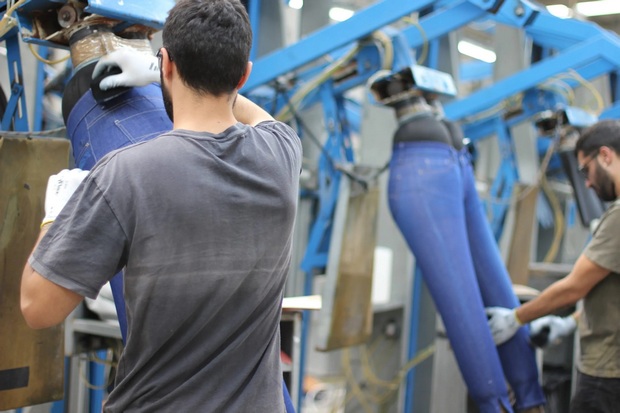
A dry processing technique that abrades the surface of a garment with a brush containing bristles made of aramid, nylon, or wire bristles to create a worn look. Brushing utilizes a hand-held electrical brush or automated brush and is less damaging to the garment while also being a faster process than sanding. Brush shapes include
- Flat
- Concave
- Convex
Laser Etching
A dry processing technique that utilizes a CAD/CAM-driven laser to burn the top layer of the dyestuff to remove color or burn holes in a garment. This technique can be used to create almost any kind of distressed or aged look on the surface of the garment and is commonly used to simulate whiskering and sanding effects.
Sanding
A dry processing technique that utilizes sandpaper to remove color from the surface of the garment to achieve a distressed appearance. Sandblasting was once very popular but is now banned in many countries due to the health risks associated with workers breathing in particles of fibers and dust produced.
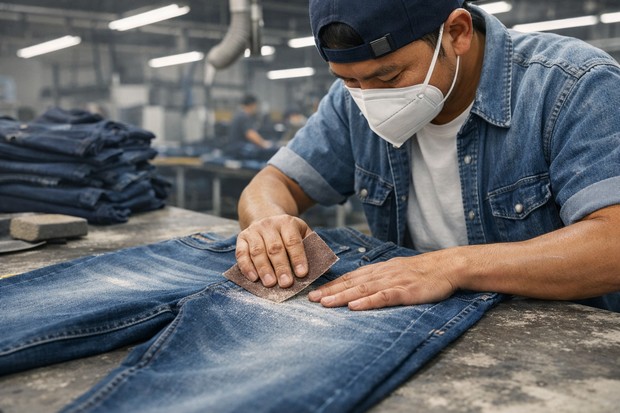
Commonly used sanding tools include
- Hand-sanding block
- Dremel tools
- Grinders
Tacking
A process for temporarily stitching portions of a garment to protect specific areas when abrasion techniques are applied. The stitching is removed after the desired level of distressing is achieved.
Whiskers, Hige, or Creases
A dry processing technique used for distressing denim garments by creating faded creases or lines in areas of wear such as
- Lap area
- Front of the thighs
- Back of the knees
- Hems
- Bottom of pant legs
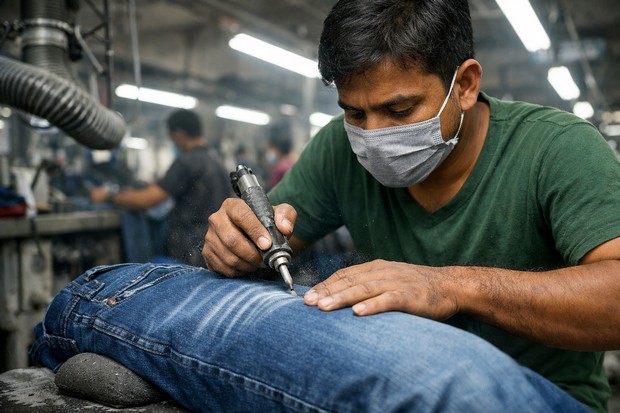
Techniques used to create whiskers or crease effects include
- Application of a resin followed by hand iron or hotpress to set the crease
- Hand sanding or Dremel tool for localized fading
These effects help denim look naturally worn in the areas that bend, crease, and fade over time.
Conclusion
Garment finishing is the final and one of the most important stages in apparel manufacturing because it directly affects the appearance, comfort, quality, and market value of a garment before it reaches the customer. Basic steps such as thread trimming, inspection, pressing, tagging, and packaging prepare garments for shipment, while wet and dry processing can soften fabrics, reduce shrinkage, or create fashionable distressing. From brushing and sanding to laser etching and whisker effects, each method serves a specific purpose in the final look of the garment. Choosing the right finishing technique helps brands deliver consistent quality and a more polished final product.