Last Updated on June 9, 2026
Polybags are a popular type of thin, flexible, plastic packaging item. Poly bags are made by extruding and molding polyethylene or similar plastic compounds into the desired shape and size. Polypropylene (PP) is a common poly bag material that belongs to its own category. Polybags, also known as polyethylene bags, provide an economical shipping choice that protects against dirt, moisture, and tampering. Polyethylene bags are heavy-duty, durable bags that easily endure rough handling without breaking or tearing.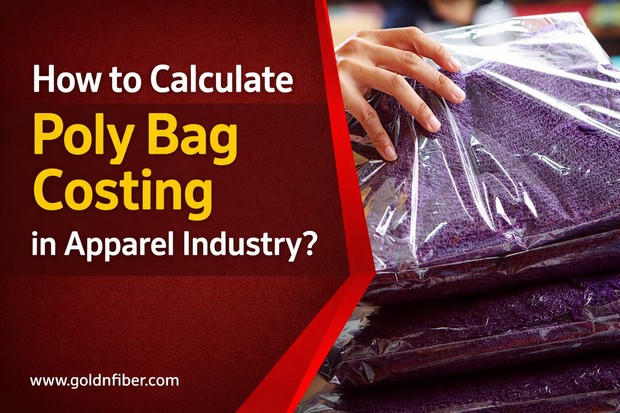
Polymer is the main substances of Polybags. Its unit is pound. It can be PP, PE, and LDPE, etc. Polybag is a mandatory item for shipment. Garment merchandiser should know polybag costing. It’s not very tough what we think. Today we are going to show you the polybag costing calculation method.
Poly Bag Costing Calculation Method:
A garments merchandiser should know the following information first before going to calculate poly bag costing:
- Polybag length
- Polybag width
- Poly bag thickness
- Flap width
- Number of print
- Current Market Rate of polymer
Thickness is expressed in gauge in the apparel industry. To put that in perspective, 100 gauge equals 25 microns, so the 150 gauge bags commonly used for folded garments are 37.5 microns thick. A higher gauge number always means a thicker, stronger bag.
Number of prints directly affects the unit cost. Each additional print color requires a separate printing plate and pass, which suppliers typically quote as an add-on charge ranging from $0.003 to $0.008 per piece depending on order quantity and print complexity. Always confirm this separately with your polybag vendor, as the base polymer cost calculation covers material only.
Important Tips*
- First calculate poly bag consumption
- Then calculate required polymer quantity to produce those poly bags.
- A garment merchandiser can easily calculate poly bag costing by multiplying poly bag consumption with polymer rate.
To clear all the confusion please refers to below example of poly bags costing.
Example:
Suppose, a merchandiser has to collect 800 poly bag for “TNF” buyer.
- Poly bag length – 32″
- Poly bag width- 18″
- Poly bag thickness – 150gauge
- ½ flap of the poly bag- 5″
- Rate of LDPE polymer- $0.42 per pound.
Note: The $0.42/lb figure is used here as a teaching example. As of late 2025, LDPE film grade polymer in the US market was priced around $1,190 per metric ton, which equals approximately $0.54 per pound (according to Intratec, October 2025). Always confirm the current rate with your supplier before finalizing any cost sheet, as polymer prices shift with crude oil movements and regional supply conditions.
Let’s calculate poly bags costing based on the above information.
Solution:
Now we can find out poly consumption in accordance with the presented data.
Poly bag consumption formula for 800pcs in kg,
= 30.27 kg per 800pcs ply bag.
So, for 800pcs poly bag, LDPE polymer needed 30.27kg.
And,
For 1pc poly bag, LDPE polymer needed, = (30.27/800) kg= 0.03kg= (0.03 × 2.20) lbs= 0.066 lbs [1 kg = 2.20 lbs]
So, final cost of 1-piece poly bag will be ($), = Polymer needed for 1pc poly bag × Polymer cost per pound (lb) = 0.066 × 0.42 = 0.027
So, the cost of 1pc poly bag is $0.027
And,
Cost of 1000pcs poly bag, = $(800 × 0.027) = $21.6
N.B: 3300 is a factor used for quick calculation which means per cubic inch of poly film in grams. This factor is applicable to LDPE only.
The 3300 factor comes from the density of LDPE (approximately 0.92 g/cm²) combined with unit conversions between cubic inches and grams. Because LDPE density stays consistent, this factor gives a reliable shortcut for material estimation across different bag sizes without needing to work through the full density conversion each time. If you are using PP or HDPE instead, this factor does not apply since those materials have different densities.
This material cost is the base only. A realistic landed cost per polybag from a supplier will also include conversion charges, printing, overhead, and margin, which typically brings the final quoted price to 1.5 to 2.5 times the raw material cost. When evaluating supplier quotations, working out the implied material cost yourself and comparing it against current polymer rates is a quick way to spot whether a quote is fair.
Conclusion
Polybag costing looks complex at first, but once you practice the formula a couple of times, it becomes second nature. Get your dimensions right, confirm the current polymer rate from your supplier, and always add printing charges on top. Miss any of these, and your cost sheet will be off.
Frequently Asked Questions (FAQs)
Q1. What is the standard polybag thickness for garment packaging?
Most garment buyers specify 100 to 150 gauge (25 to 37.5 microns) for folded apparel and 50 to 100 gauge for hanging garments. Thicker bags are used for heavier items like denim or outerwear. Always check the buyer’s packaging manual, as required thickness varies by brand and product category.
Q2. Why is the LDPE rate in polybag costing calculated in pounds and not kilograms?
Polymer is traded internationally in pounds as the standard unit, particularly in the US market where most polybag pricing is benchmarked. The calculation converts the bag weight from kilograms to pounds before applying the polymer rate so the units stay consistent. Once you know your current kg price, multiply by 2.20 to get the pound equivalent.
Q3. Does the number of prints on a polybag change the material cost calculation?
No, the number of prints does not affect the polymer or material weight calculation. Print costs are added separately as a per-piece charge by the supplier, covering plate fees and ink. The base costing formula shown above covers material only, so always ask your vendor for a separate printing surcharge before finalizing your cost sheet.
Q4. Can I use this same formula for PP polybags?
The formula structure works for PP bags, but the 3300 factor does not apply. PP has a different density than LDPE (approximately 0.90 to 0.91 g/cm3 compared to LDPE’s 0.92 g/cm3), so you need to use the correct density value for your material in the consumption calculation. Confirm the density with your resin supplier and adjust accordingly.
Q5. How often do polybag costs change and how should a merchandiser handle this?
Polybag costs can shift month to month because LDPE and PP prices track crude oil and ethylene feedstock markets. A practical approach is to get firm quotations from suppliers valid for 30 to 60 days and lock in pricing once your order is confirmed. For long-running programs, some factories build in a price adjustment clause tied to published polymer indices.