Production Sewing Equipment
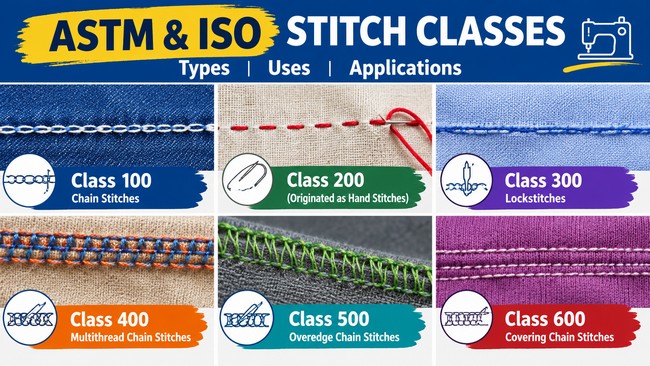
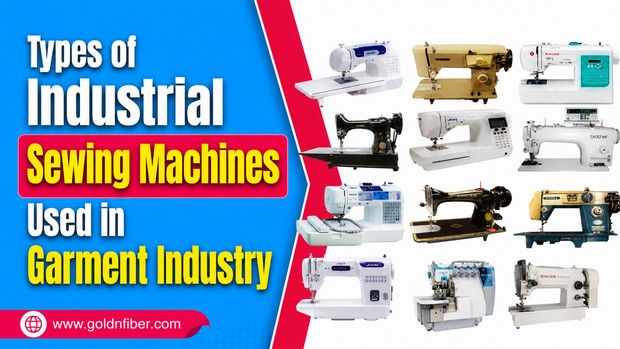
On a garment production floor, different operations call for different machines. Garment production requires a variety of machines to produce different types of stitches, seam constructions, and stitching details. Industrial sewing machines are characteristically designed to produce one type of stitch. That is why production sewing is usually organized by function, not by a single all-purpose machine. Each machine has a clear role, and the job becomes easier to manage when the equipment is grouped by operation. The machines below cover reinforcement, fastening, stitch formation, and seam finishing.
Types of Industrial Sewing Machines
These machines are used for points that need strength, secure fastening, a neat closure, seam construction, or edge finishing. In production, they handle small details that make a garment more durable and more complete.
Bartacking Machine
A sewing machine that produces tightly packed zigzag stitches to reinforce areas of garments that need extra strength. Bartacking machine is used for securing:
- Belt loops
- Pocket openings
- The base of fly front closures on jeans

Fig: Bartacking Machine
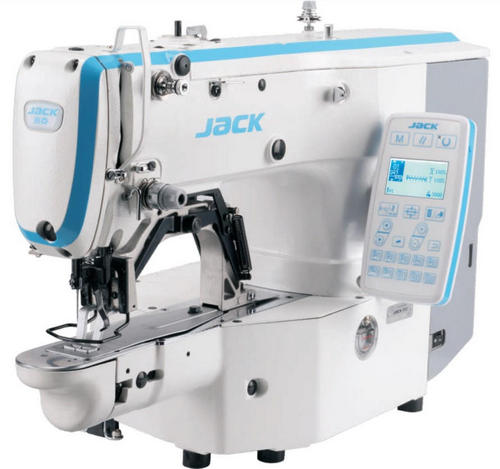
In garment production, this machine is chosen when a small area needs strong reinforcement. The stitching is concentrated, so the added strength stays exactly where it is needed. This is a small operation, but it supports some of the most stressed parts of a garment.
Buttonhole Machine
A sewing machine that produces a stitched buttonhole. Buttonhole machines can produce:
- Stitched buttonholes
- Keyhole buttonholes
- Stitched eyelet holes

Fig: Buttonhole Machine
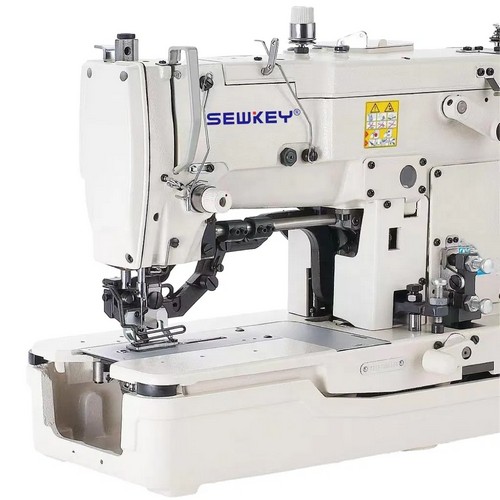
This machine is used when the fastening opening must be made neatly and consistently. It handles different buttonhole forms, depending on the garment requirement. The stitched opening gives a clean and controlled finish.
Button Sewing Machine
A sewing machine that stitches a button or sew-on snap to a garment.
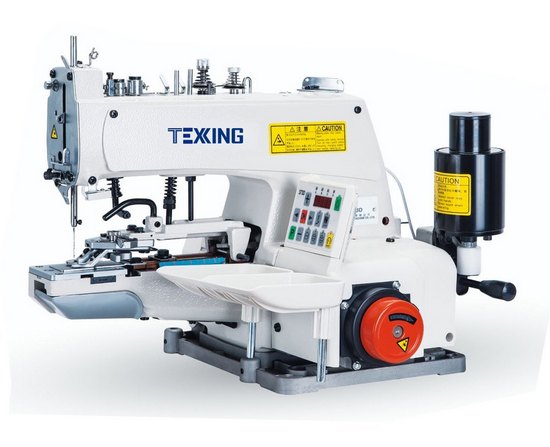
This machine is used for attaching the fastener itself. In garment production, that makes it a straightforward but necessary part of the sewing room. It is a small operation, but it is essential in production sewing.
Chain Stitch Sewing Machine
A sewing machine that produces stitches formed either by one looper thread or by a looper thread and needle threads. Varieties of chain stitch machines include:
- Blind stitch
- Single-needle chain-stitch basting
- Flat-bed two-needle double chain stitch
- Feed-off-the-arm lapseamer
- Feed-off-the-arm double chain stitch
- Feed-off-the-arm four-needle double chain stitch
- Feed-off-the-arm four-needle flatseamer

Fig: Chain Stitch Sewing Machine
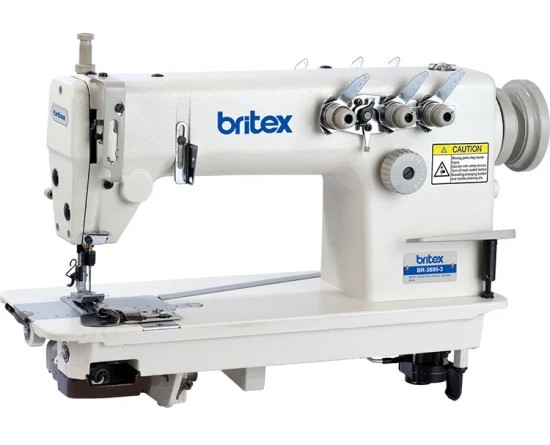
Chain-stitch machines cover several production needs because the stitch formation can vary. The construction changes depending on whether the stitch is formed by one looper thread or by a looper thread and needle threads. That is why this machine family includes so many varieties. Each type serves a different sewing situation, and the list shows how wide the chain-stitch category can be.
Coverstitch Machine
A sewing machine that produces stitches formed by a looper thread and multiple needle threads that joins two plies of fabric while covering the raw edges.
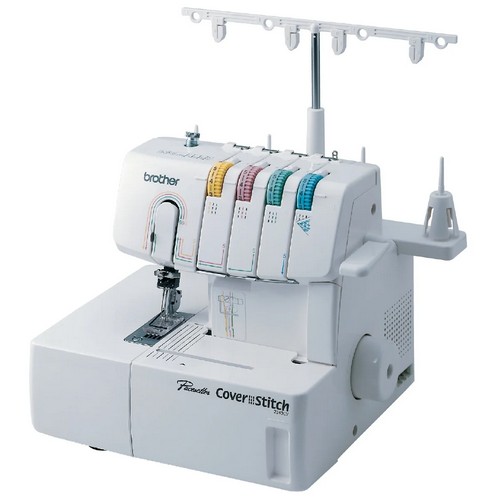
This machine is used where joining and edge covering are done together. The stitch formation helps keep the raw edges covered while the two plies of fabric are joined. In production, that combined action saves time and keeps the seam handling simple.
Lockstitch Sewing Machine
A sewing machine that produces a series of straight stitches formed by interlocking a bobbin thread and needle thread. A twin needle can be inserted to create parallel rows of stitching simultaneously. Varieties of lockstitch machines include:
- Single-needle lockstitch
- Double-needle lockstitch
- Single-needle zigzag lockstitch

Fig: Lockstitch Sewing Machine
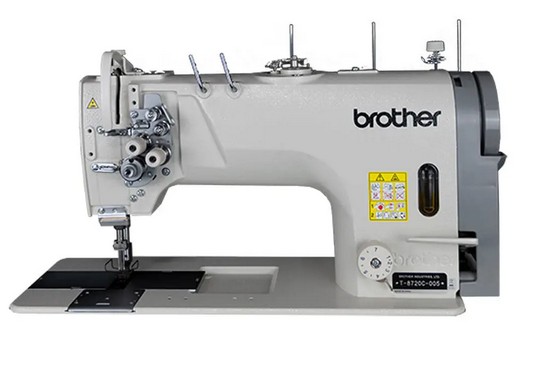
The lockstitch machine is one of the most familiar machines in garment production because it produces straight stitches through the interlocking of a bobbin thread and needle thread. The option of using a twin needle gives parallel rows of stitching at the same time. That makes the machine useful in more than one sewing situation while keeping the basic stitch principle unchanged.
Overlock Sewing Machine
A sewing machine that forms stitches over the edge of a seam. When the fabric is passed through the machine, it stitches over the raw edges. Some machines are equipped with a knife blade that cuts the unneeded seam allowance away and then stitches over the cut edge.
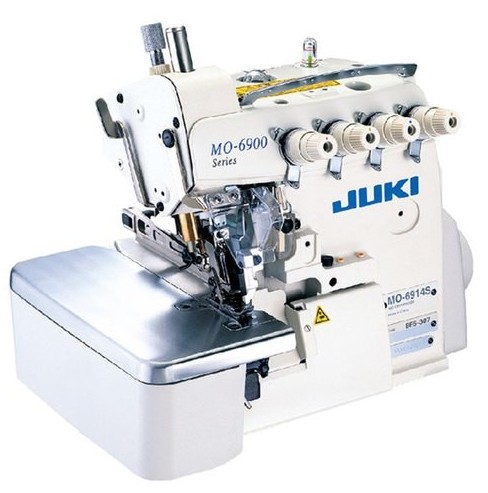
This machine is used when the seam edge needs to be handled as part of the sewing operation. The raw edge is stitched over, and in some machines the unneeded seam allowance is also trimmed away first. That combination makes the operation efficient and keeps the edge treatment in one process. The machine is often chosen when raw edges need to be handled quickly and neatly.
Uses of Production Sewing Machines
Although each machine has a different job, they work toward the same goal in garment production. Bartacking machines strengthen specific points. Buttonhole machines create openings for fastening. Button sewing machines attach the button or sew-on snap. Chain-stitch machines, coverstitch machines, lockstitch machines, and overlock machines deal with seam formation and seam finishing.
This is why industrial sewing machines are characteristically designed to produce one type of stitch. The specialization may seem narrow at first, but it is practical on a production floor. When each machine is matched to the right operation, the process stays organized and the sewing quality becomes easier to control. That is a simple but important part of garment production.
Conclusion
Production sewing equipment covers a wide range of garment operations, from reinforcement and fastening to stitch formation and seam finishing. Bartacking machines, buttonhole machines, and button sewing machines support the fastening and strength needs of garments. Chain-stitch machines, coverstitch machines, lockstitch machines, and overlock machines handle different stitch and seam constructions.
Each machine is designed for a specific purpose, and that is what makes production sewing efficient. The list is varied, but the idea behind it is consistent. In garment production, the right machine at the right stage keeps the work clear, practical, and well organized. As garment styles and stitching details continue to change, this basic machine grouping will remain useful.