Last Updated on August 3, 2026
Step-by-Step Fabric Shade Separation Procedure
Shading is an important defect to catch before step into production. In garment manufacturing, even a small shade shift can become visible after cutting and sewing, so early separation helps avoid rework and buyer rejection. Whenever apparel industry purchases required fabric from the supplier, they may found different fabric shade after recipient. It may occur during fabric dying. Shade variation can also come from lot-to-lot dye differences, finishing changes, or uneven processing across rolls. When fabric mills produce lots of fabric and during dying fabric color may differ from one lot to another lot. As per buyer advice, quality should separate shade of any incoming fabric whenever those receive at material control department (MCD) and then have to make swatch. The swatch comparison should be done under the same lighting condition every time, and all swatches should face the same direction for a fair visual check. The bundle has the responsibility to check for shade problems before allowing the bundles to be put into the line. Both rolls and cut should be checked for shading problems. If mixed shades reach cutting, the problem usually shows up later as panel mismatch, visible bands, or uneven garment appearance. The procedure which QC is following for making swatches and shade separations describing below: 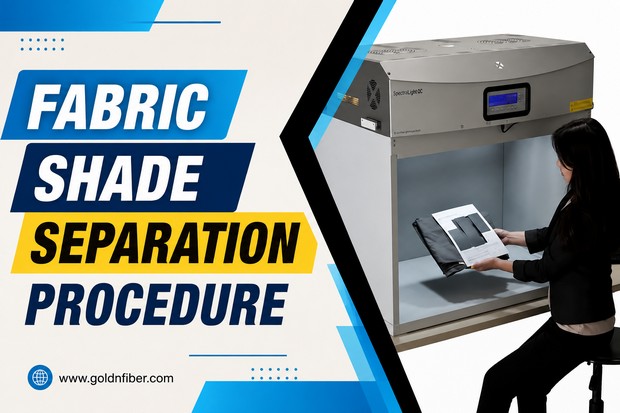
- When material department receives any fabric for a certain Invoice, they sent those to QC department to make shade. QC cut one small piece (size –4-inch square swatch) from every roll whatever the consignment is small or big in quantity. It is important to obtain a sample from every roll so that the rolls are checked 100%. If a roll looks borderline, keep it aside for recheck instead of forcing it into a group too early.
- QC has to write all rolls information onto those cut pieces; compare with Buyer approved standard swatches and need to watch all swatches very carefully. All samples should be laid out and grouped by shade. If find shade variation they have to segregate those pieces into different shades on the basis of closer shade like Shade# A, Shade# B, Shade# C etc. This area must be well lit in order to properly shade the rolls. Keep the swatches flat and aligned in the same fabric direction, because twisting or folding can change how the shade looks.
- If found some rolls of shade A and some rolls of shade B, QC collect more three pieces (size – 4” x 3”) from selected roll among certain shade group and attach it to swatch board as a representative of particular shade group. Rolls should be grouped together accordingly by shade. If one roll sits between two groups, hold it for a larger recheck rather than mixing it into the closest shade. The same lot, roll number, and quantity details should appear on every copy so the records stay traceable.
Moreover, QC writes down all rolls number, lot number, and quantity under particular shade group and makes four copies of swatch board with all information. - Out of 4 swatch boards, QC has to send one copy to material control department (MCD), one copy to merchandiser, one copy to concern cutting (production) and remaining one copy of their individual record and reference. The cutting room should receive the approved shade map before marker planning starts, so no wrong group is issued by mistake.
- In case of serious shade variation QC has to make more shade cards, for example material control department received 100 rolls/10,496 yards of fabric item: – Citation Twill, Color – Work wear Blue from Brook wood USA. QC inspector has to make six swatch cards with detail information of all rolls. Three cards needed for merchandiser (one for supplier, one for buyer lesion office and other for own keeping), one card for store, one for Cutting and another one for QA record. As per our previous fabric receiving records, QC team have to make six swatch cards of even 600 rolls in future which will take more manpower and long time that will affect our normal fabric inspection procedure seriously. For large lots, this extra card system helps prevent confusion when several shades are close to each other.
- Production/cutting has to make a plan which shade group can be cut for which PO and which country on the basis of order break down so that no different shade group fabric is used for one country or any Purchase Order. Do not mix shade groups inside the same garment panel or repeated component, because the difference can become obvious after sewing and pressing.
Proper shade separation saves fabric, reduces rework, and keeps bulk production consistent. If the rolls are grouped correctly before cutting, the final garments are much less likely to show visible shade mismatch.
Frequently Asked Questions (FAQs)
Q1. What is fabric shade separation in textile QC?
Ans: Fabric shade separation is the process of checking incoming rolls and grouping them by visible shade difference before cutting. It helps prevent mixed-color garments and keeps production consistent.
Q2. Why is shade separation important before cutting fabric?
Ans: If shade variation is not caught early, different panels of the same garment may look uneven after sewing. Separating the rolls first avoids rework, buyer complaints, and fabric waste.
Q3. How do QC teams identify fabric shade variation?
Ans: QC teams usually cut swatches from every roll, compare them with the buyer-approved standard, and group similar shades together. The inspection should be done under the same light and with the swatches laid out clearly.
Q4. What causes shade variation in fabric rolls?
Ans: Shade variation can happen because of dye lot differences, machine settings, finishing changes, or uneven processing in the mill. Even fabric from the same order can look slightly different from one roll to another.
Q5. How many shade cards should be made for a fabric lot?
Ans: The number of shade cards depends on how many visible shade groups are found. A small lot may need only one board, while a large or mixed lot may need several cards so the cutting room can control each group properly.