Last Updated on June 24, 2026
What is Apparel Checking or Inspection?
Apparel Checking or Inspection is an inevitable task in garment industry. To maintain quality standard checking or Inspection have to be done through quality people. Checking is an initiative to keep the product quality where step by step tries to find out quality faults or defects or poor workmanship which will not meet the required quality parameters. A garment quality defect checklist helps the QC team track every stage from fabric receiving to final packing in one place.
A good checklist should also separate critical, major, and minor defects so the team can decide whether to repair, rework, or reject the piece.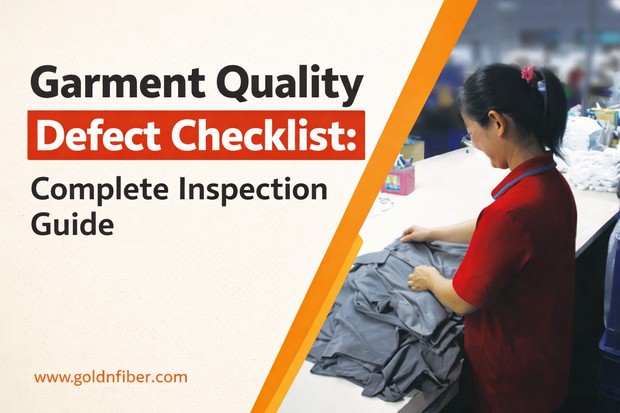
The main motto of quality checking or Inspection is to deliver the best quality product to customers. Thus manufacturers recruit many people to keep product quality and spend huge money to retain company’s goodwill. Another motto of quality checking or Inspection is to find out the defects at the initial stage to erase unexpected hassles. If defects found at initial stage it obviously well and good but if defects found at end stage that may create worse situation. The defects which are identified during quality inspection will be marked with the help of white sticker and send for rectification if possible but if defects become serious, those will be marked with the help of red arrow sticker and that particular piece will be rejected. All of these attempts only to get good quality pieces that will be passed for the next process.
For sample-based approval, many factories use an AQL plan based on ISO 2859-1 or ANSI/ASQ Z1.4, so the inspection sheet should show sample size, defect class, and accept or reject status.
A simple defect log should also record the garment part, defect type, line number, and whether the issue is repairable, because repeat defects are easier to control when the root cause is written down.
Quality Checking Points in Apparel Production:
In practice, it is easier to separate inspection into incoming, in-line, and final checking, because each stage catches a different type of problem.
Quality inspector has to check following checking points during inspection to make smooth of production.
Fabric, Trims & Accessory Store Quality Checking or Inspection:
- Fabric cut panel have to send for Lab Test i.e. colorfastness test, Flammability test, Water resistance, strength & Wicking etc.
- All Accessories should check physically to measure defect and quality
- Fabric roll checking through inspection machine
- GSM check of fabric
- Fabric and Accessories counting compare with packing list
- Shade band making
- Shade band report submit to merchant, cutting and store section for decision making
- Check care label, hang tag artwork to find out mistakes
- Fabric width check and count receiving quantity
- Table Inspection: QA personal should check bundle ticket then confirms the style and fabric surface. Cutting QA personal check only paper indicates cut panel.
- Defect and shortage report submit to merchandiser to claim supplier
For fabric roll checking, many mills still use the 4-point system described in ASTM D5430, and a shade band approved under standard light helps the store avoid lot-mixing mistakes.
Cutting Quality Checking or Inspection Points:
Cutting quality has to check following points-
- Should check first trim card, worksheet, Order quantity and size assortment
- Should check PP sample and ensure that all parts exist in the marker
- Check fabric nature to consider shrinkage after spreading in cutting table
- Work with Pattern maker to match fabric check before cutting
- Measurement chart checking
- Make sure that size set sample has done and passed by quality
- Cutting layer checking,
- Fabric width checking,
- Color wise size assortment and mistake checking
- Check Marker efficiency
- Fabric roll shade checking
- Bundle checking
- Thickness checking
- Marker way checking
- Fabric color mistake checking
- Cut panel checking
- Defect report making
A cut panel should not move to sewing until shrinkage allowance, notches, and bundle ticket details match the approved sample, because cutting errors become costly later in the line.
Sewing Quality Checking or Inspection Points:
Sewing quality has to check following points-
- PP sample checking
- Spec sheet and PP comments checking
- Should check first trim card, worksheet, Order quantity and size assortment
- Apparel measurement chart checking
- Order quantity and size assortment checking
- Check approved sample and make sure that all fabric cut panels are in production line
- Thread color combination check with fabric
- Label checking i.e. size label, care label, price label etc.
- Sewing thread shade variation checking
- Input fabric quality checking
- Front part checking
- Back part checking
- Bundle checking
- Check Uncut sewing threads and trimmed well
- Fabric size ratio checking
- Contrast color checking
- Embroidery, print measurement and placement checking
- Sewing defects checking
- Oil mark checking
- Size set checking
- SPI i.e. Stitch per inch checking
- Stitch tension checking for all the sewing machines
- Thread tension checking of all sewing machines
- Alter checking
- First production checking with PP sample
The first production check should be done at the start of each line and again after any machine or operator change, because stitch balance and measurement can shift within a shift.
Printing Quality Checking or Inspection:
- Printing measurement and placement checking
- Printing recipe and color combination check with shell fabric
- Printing quality check with mock up and approved sample
- Detect defect printing parts and ensue replacement
- Prepare quality report
Keep the approved print sample beside the line and compare under the same light source each time, because color judgment changes when the lighting changes.
Embroidery Quality Checking or Inspection:
- Embroidery measurement and placement checking,
- Embroidery Thread color combination check with shell fabric
- Embroidery quality check with mock up and approved sample
- Detect defect embroidery parts and ensue replacement
- Prepare quality report
Embroidery placement should be checked from seam edge to design edge, because a design can look centered on paper but still sit too high or too low on the garment.
Washing Quality Checking or Inspection:
- Washing recipe, shrinkage percentage and measurement chart checking,
- Washing method, time, duration and washing effect checking
- Check washing effect with approved sample or mock up
- Ensure zip puller, printing and embroidery parts safety during washing process
- Detect defect garments after washing and ensue replacement
- Prepare quality report
Do a wash test on one sample garment first, then compare shrinkage and appearance with the approved sample before bulk washing.
Finishing Quality Checking or Inspection Points:
Sewing quality has to check following points-
- Folding method checking
- Shipping mark checking
- MCQ checking
- Trim card checking
- Poly size checking
- Price sticker checking
- Hang tag checking
- Iron checking
- All types of label checking
- Quality of print and embroidery checking
- Dirty spot checking
- Oil spot checking
- Carton size checking
- Quantity of each carton pcs checking
Final packing should be checked against the buyer’s carton ratio, poly ratio, and size assortment before sealing, because the biggest finishing loss is often a packing mistake, not a sewing defect.
Conclusion:
A well-structured garment quality defect checklist works best when the team checks the right process at the right stage, records the defect clearly, and closes the root cause before bulk production continues. It protects quality, saves cost, and keeps the buyer happy.
Frequently Asked Questions (FAQs)
Q1. What is an apparel inspection checklist in the garment industry?
Ans: An apparel inspection checklist is a step-by-step quality control list used to check fabric, cutting, sewing, printing, washing, finishing, and packing. It helps the factory catch defects early and decide whether a piece should be repaired, reworked, or rejected.
Q2. What are the common quality defects found in garments?
Ans: Common garment defects include shade variation, broken stitches, skipped stitches, open seams, oil stains, print misplacement, embroidery misplacement, and packing errors. The exact defect list depends on the style and the process used in production.
Q3. What is AQL in apparel quality inspection?
Ans: AQL means Acceptable Quality Limit. It is used to decide how many pieces should be checked from a lot and when a shipment can pass or fail under an inspection plan based on standards such as ISO 2859-1.
Q4. What is the difference between inline inspection and final inspection in garments?
Ans: Inline inspection happens during sewing or processing, so defects can be corrected while the line is still running. Final inspection happens after finishing and packing, and it checks whether the shipment matches the buyer requirement.
Q5. How do you inspect garments before packing?
Ans: Check measurement, labels, trims, stains, thread trimming, folding, polybag ratio, and carton marking against the buyer’s packing instruction. It is also smart to recheck size assortment and quantity per carton before sealing.