Last Updated on June 30, 2026
What Is Negotiation?
It is one of the vital quality of a merchandiser to negotiate with a buyer or a supplier successfully. In garment merchandising, this skill helps protect margin, keep the order realistic, and avoid last-minute confusion. Through this skill, a merchandiser can generate a successful order from a buyer at the right price and other terms and conditions independently. On the other, he can place an order to a right supplier at a right cost and delivery schedule. The most important things of negotiations is generally fixing the price of the product, but the other issues include order volume, lead time, delivery and payment terms etc. A merchandiser should treat those items as tradeable points, because a small shift in one term can often balance another.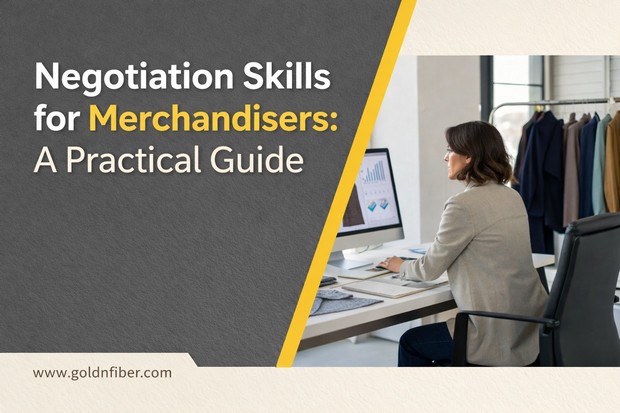
Negotiation is well known as bargaining, is a process of communication and trading of ideas between two parties buyer and seller by which they make a series of demands and compromises so as to come to the desired point of mutual acceptance so that both parties will gain benefit from the transaction of business. It is a series of communication and discussion, which may go very hard (often very tough) but running in a friendly environment to come to a mutually beneficial position. The function of negotiation is not to push the other party to defeat rather than work out a win-with solution so that both parties can transact business with profit. A written summary of the agreed points is useful at this stage, because it reduces later misunderstanding.
Why Do You Need to Negotiate With the Parties?
You negotiate with a buyer or supplier for the following reasons:
- If you require to lower the cost or increase price of the product
- If you want to secure an order from the buyer or place an order to a supplier
- If you need to fix production and shipment plan
- If you need to make a cost sheet or want to get the product selling price for mutual benefit
- If you must determine payment terms and conditions mutually profitable and acceptable etc. If the buyer will not move on price, the merchandiser can often ask for better payment terms, a larger quantity, or a more flexible shipment window instead.
The basic principle of negotiation is to “trade what is low value to you but of greater value to the other party, thereby reducing the ‘cost’ of success to you.” But one should understand that negotiation succeeds if both of the parties mutually benefit from the result of the talks. In practice, a win-win deal means both sides accept a price, schedule, and quality level they can actually honor.
Negotiation Process
Negotiation is treated as a technique to enhance business growth. Businesses often become successful or failure due to the success or failure attempt on the negotiating table. So a buyer or merchandiser or supplier must be aware of the following necessary steps for a successful negotiation. To make a fruitful negotiation both parties should become calm. But both parties should deliver good response and quick feedback to make a fruitful negotiation. Before the meeting, the merchandiser should keep the cost sheet, target price, capacity check, approved sample, and minimum acceptable terms ready.
You Must Adequately Know the Requirements of Both Parties
A merchandiser must well understand the needs of the buyer, his organization, and the supplier. Then it would be easy to make a deal. The buyer has intended retail selling price in his mind. So the merchandiser must have sufficient knowledge of garment construction and standard time of the product. He may put forward suggestions so as to bridge up cost price, and buyers target price, lead time, delivery schedules etc. are issues which a merchandiser can use for fruitful negotiations. The status of communication often shows up in facial expressions, body languages, and verbal reactions, which a merchandiser must well observe for successful outcome of the discussion. Merchandisers must listen and oversee the negotiating parties to pull the trade benefits to own favor. He should also know his own fallback position before the discussion starts. A calm tone and short, clear answers usually work better than rushing to close the deal.
Merchandisers Must Adequately Prepare for the Negotiation
Merchandiser must properly prepare for the meeting and trading the negotiation. There should be an agenda and time frame for the meeting. Delay or negligence will bring a worse situation. Merchandiser must be fully aware of the garment items to be negotiated, product price, order quantity, lead time, freight, garment construction, fabric consumption, cutting and making charges, charges for printing, embroidery, standard time of the garment etc. so that he is fluent about all aspects of negotiation. Full preparation from the side of the merchandisers about all issues of help come to a successful outcome very quickly. Merchandiser as a negotiator must have a maximum and minimum positions in respect of the order, its price, delivery schedule, order volume etc. The agenda should include what can be negotiated and what needs internal approval, so there is no confusion during the meeting.
Discuss the Offer
During discussion, merchandiser must identify the position of the buyer in respect of the offer and if necessary sets his boundary for further negotiation. It is very much expected that different aspects of the offer may change during the course of the tasks. This creates an opportunity for both of the parties. If the buyer pushes for a lower price, the merchandiser should first check whether the pressure comes from order volume, fabric price, or shipment timing.
Further Discussion
At the stage of each party weight proposals of the other party. Merchandiser must carefully observe the tone and wording of the buyer, his facial expressions, and body language to understand buyer’s interest or disinterest and where the final boundary of the buyer lies. He takes note of the vital areas of interest to the buyer and his areas of flexibility. The point repeated most often by the buyer usually shows the real priority.
Final or Revised Offer
This is the final stage of negotiation when details of the offer are worked out. The details may include construction and specifications of the garment, order size, product price, shipment date, lead time, payment terms etc. the buyer makes a final offer, and the merchandiser as a negotiator must ensure that the offer is profitable for his company. Negotiations often may go very tough, but the spirit is to come to a mutually beneficial position, where both parties stand on a win-win situation. The final offer should be repeated back point by point before it is accepted, especially for price, lead time, and payment terms.
Making an Agreement
Merchandisers must make their best efforts so that discussions turn into real deals financially beneficial to his company. As soon as negotiation succeeds the buyer communicates the details to the manufacturing company respective person by the merchandiser. These details take the form of a Master L/C, P.O sheet (Purchase order sheet) or worksheet. As soon as the worksheet is at hand, the manufacturing company may go for booking order for fabrics, trims, accessories as well as making production and shipment plans. A confirmation email, worksheet, or approved purchase order should be issued immediately so the factory and buyer are working from the same terms.
Conclusion
Negotiation skills are key competency of merchandisers to prolong their career graph. After reading this article, we can say a merchandiser who wishes to get success in his path must be a good coordinator and negotiator with a buyer or a supplier. An efficient merchandiser can close the deal into the real agreements to work out a win-with situation so that both parties can transact business with profit. Good negotiation is not about forcing agreement. It is about preparation, clear trade-offs, and written confirmation so both buyer and supplier can move forward with confidence.
Frequently Asked Questions (FAQs)
Q1. What is the role of a merchandiser in negotiation?
Ans: A merchandiser connects the buyer’s target with the factory’s real cost, capacity, and delivery limits. The job is to reach a workable price and schedule without damaging the relationship.
Q2. How do you negotiate price with a buyer in garment merchandising?
Ans: Start with a cost sheet and a clear target price, then explain the cost drivers that affect the quotation. If price cannot move further, trade on quantity, shipment timing, or payment terms instead.
Q3. What should a merchandiser prepare before a negotiation meeting?
Ans: Keep the approved sample, fabric consumption, trim cost, lead time, and factory capacity ready. It also helps to know your minimum acceptable price and the terms you can give up.
Q4. What are the common mistakes in merchandising negotiation?
Ans: Common mistakes are agreeing too early, not checking the cost sheet, and failing to confirm the final terms in writing. Another frequent problem is focusing only on price and ignoring delivery or payment conditions.