Last Updated on May 30, 2026
What is Purchase Order (PO)?
Purchase Order (PO) is one sort of written document between suppliers and purchasers to deliver goods or services. It is known as PO sheet for us. It is a clear evidence for purchasers where exist some specific terms and conditions to fulfill a purchase order. Seller or manufacturers have to obey that specification information such as product description, Product Price, lead time, size break-down, order quantity, expected deliver date, packing guideline, payment method, date of payment, shipping mode and shipping address to expedite an order.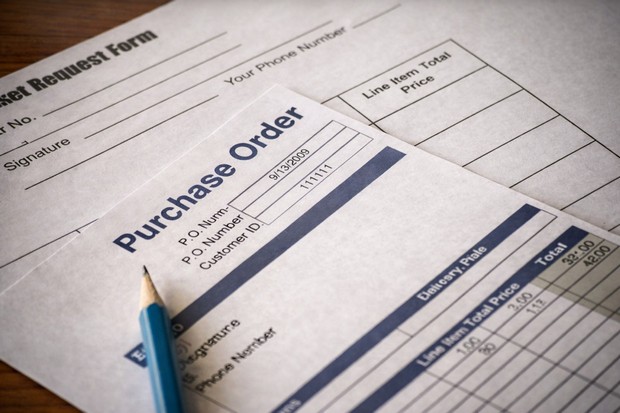
A PO sheet also works as a tracking tool for both sides. Brands use the PO number to track progress, receive the order, and process payment. Factories use it as a production guide and to receive payment. Without a confirmed PO sheet in hand, departments like cutting, sewing, warehouse, and quality control cannot work from the same reference point.
Some difference may found between local and foreign purchase order. Thus both parties should follow a standard formats for purchase order. Sometime buyers deliver especial formats according to their company recommendations for material procurement’s. If found any discrepancy in PO Sheet that time supplier can clear it through communications.
A common discrepancy example is when the PO lists one fabric specification but the buyer’s separate spec sheet mentions another. In that case, the supplier should not start production until the buyer confirms the correct version in writing. This small step prevents costly rework and shipment disputes later.
Another thing worth knowing: a +/- 5% variance in final quantity is normal in garment manufacturing. Material constraints and quality control cuts mean the shipped quantity rarely matches the PO exactly. Most buyers accept this range, but it should be stated clearly in the PO terms so there is no dispute at the payment stage.
Standard Format of Purchase Order Sheet of Garments Industry:
A standard purchase order format should have existed following features. Such as; 1) Header, 2) Date, 3) Suppliers information, 4) Shipping details, 5) Order description, 6) Footnote or Summary of purchase.
If you are a garment seller or fashion designer, just pick a garment from the market and copy it whatever you need and change little bit construction to develop a new sample. Then create a purchase order and provide as much information as required to submit garment manufacturer for production.
If you are not sure about certain technical details when filling out your first PO, it is perfectly fine to ask the supplier to recommend options for things like fabric weight or construction. Experienced suppliers handle this regularly and will guide you. Just make sure their recommendation is confirmed back in writing and attached to or noted on the PO before production begins.
A PO Sheet May Exist Following Mandatory Items.
| Parameters | Description |
| Product/Style name | You have to mention style name and specify product category to do production. |
| Product description | Please try to narrate product description as much as you can. It would be better if add a clear image with indication for smooth production. |
| Order quantity | Purchaser has to mention total order quantity in the PO Sheet. Retailer has to depend upon their monthly sales forecast to fix the number of order quantity. |
| Size break-up in order | Retailer has to analyze monthly sales ration and assume which size of dress generate more business. Then they have to fix size break-up in the order sheet. Regarding school dress, institute should check student’s age, size of garment and make a list. Beside this for uniforms, industry owners should check employee’s age, body mass index indication to make size break-down for PO Sheet. |
| Fabric Details | Purchaser has to mention fabric details like fabric construction, fabric code number, GSM, fabric type, coated or non-coated fabric etc. in the PO Sheet. |
| Fabric color and Logo design | Fabric color is more important for multiple color orders. Beside this if you want a design in your garment, first develop the design or logo size, color that to be printed on the garment and fix the placement of logo or print designs on the garment. |
| Washing Details | Regarding washing fabric you have to provide washing instructions along with order sheet. |
| Measurement sheet | Buyer has to provide measurement sheet. Buyer can follow country wise standard measurement sheet. Beside this garment manufacturer can develop a standard measurement sheet based on your design based demographic statistics. |
| Labeling | Buyer has to mention quantity of all category labels like care labels, main label and size label, woven label or anything else. |
| Price | Mention finalized item price in the PO Sheet. |
| Packing details | At the end of the PO Sheet buyer should mention goods folding and packing instruction. |
| Sticker and Tags details | You have to provide image, logo, barcode and text to the supplier for designing or developing sticker and hang tags (price tags, hand tags). If applies to your order you have to mention where to attach hang tags and means of attaching hang tags. This applies for retailing orders. If you have design facilities then you have to forward it to Supplier for production. |
| Shipping Address | PO Sheet exist shipping address clearly so that supplier can send finished goods quickly. |
| Others | Add payment terms and conditions at the end of the footnote of PO Sheet. |
Beside this If you need any test requirement then please mention it clearly in details in the PO Sheet.
Frequently Asked Questions (FAQs)
Q1. What is the difference between a purchase order and a purchase invoice in garments?
A purchase order is issued by the buyer before production starts. It sets the terms for what should be made, in what quantity, at what price, and by when. A purchase invoice is issued by the supplier after delivery and confirms the actual goods shipped and the amount owed. You need both documents to complete a garment order properly.
Q2. What is a PO number and why does it matter?
A PO number is a unique reference code assigned by the buyer when they create a purchase order. Every department in the factory, from warehouse to QC, uses this number to track the order. It also appears on the invoice and shipping documents, so it must stay consistent throughout the entire production and export process.
Q3. Can a factory start production without a confirmed PO sheet?
Starting production without a confirmed PO is risky for both sides. Without it, there is no agreed record of price, quantity, or delivery terms. If any dispute arises over quantity, quality, or payment, there is nothing to refer back to. Most professional factories will not begin cutting fabric until a signed or formally confirmed PO is in their hands.
Q4. What should I do if my PO has a mistake after it has been sent?
Contact the supplier immediately and issue a revised or amended PO with the corrected information. Make sure both parties acknowledge the change in writing before any production work is done based on the original version. If production has already started, discuss with the supplier what adjustments are possible and document the agreed resolution.
Q5. What is over-ship and under-ship tolerance in a garment PO?
These are the acceptable limits for how much more or less than the ordered quantity a supplier can ship. For example, a 5% over-ship tolerance on an order of 1,000 pieces means the factory can ship up to 1,050 pieces. This buffer exists because fabric cutting and production rarely yield an exact count. The tolerance should always be stated clearly in the PO to avoid payment disputes.