Last Updated on May 27, 2026
Introduction
Many issues can control human fashion trends such as social, economic, environmental, and personal factors. There are five human basic needs as we know i.e. food, clothing, shelter, education and treatment. Clothing is one of the important basic needs for human being. Clothing covers and protects them from heat, cold, rain or other unwanted substances. People become delighted by wearing colorful cloths. On the other hand clothing presents your wealth, states, age, occupation and gender etc.
Selection factors of clothing are mainly divided into four group’s i.e. social factor, economic factor, environment factor and psychological factor. By the above picture we can realize the importance of most influencing factors of selection of clothing. Now we will try to describe all the influencing factors affecting clothing selection.
Factors Affecting for Clothing Selection
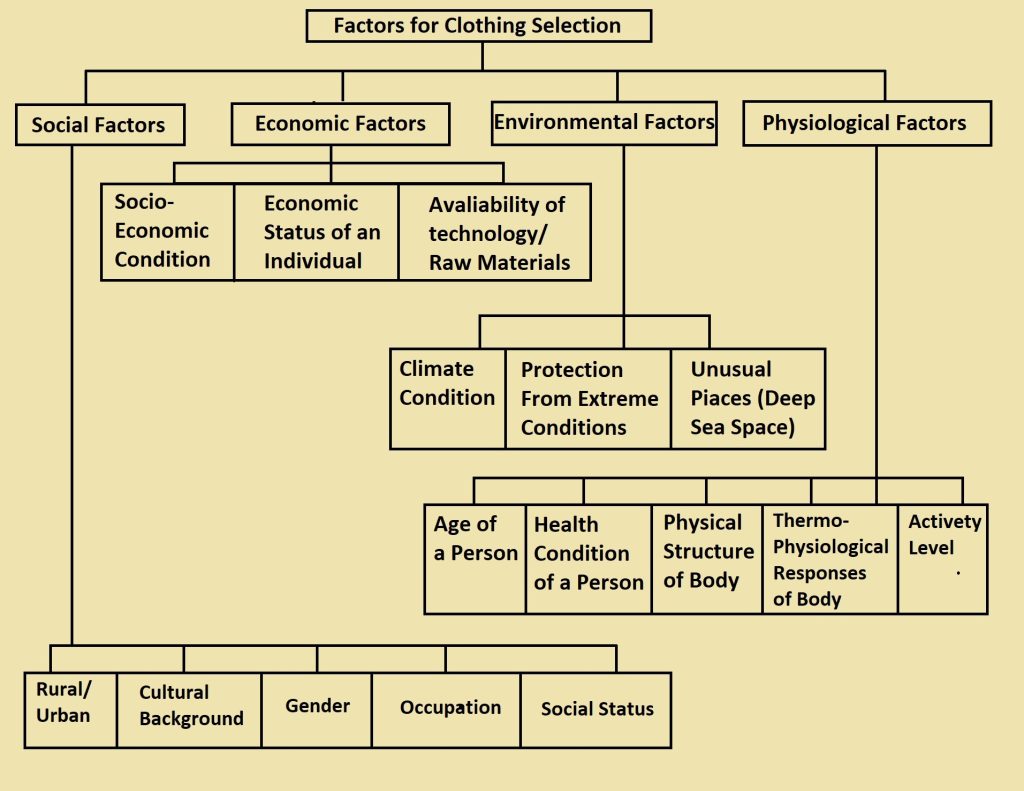
Selection of clothing mainly divided into four parts. These are:
- Social factors
- Economic factors
- Environmental factors
- Physiological factors
Now, we are going to narrate all of those four factors below:
1. Social Factors
Socioeconomic factors like social class, age, income, region, educational background, Cultural background price will create a great impact for clothing selection. The main purpose of wearing clothes is to become smart, active and sober. Following elements may reflect in social factor. Such as:
- Gender
- Occupation
- Occasion
- Social status
- The place where person live (urban or rural)
- Cultural background of person
- Human Fashion Trend
- Personal factors
A) Gender
Male & female choice may not be same for clothing selection. Naturally there are some differences between both. Though gender discrimination’s are not acceptable in modern society & many of us strongly compete against it, but for clothing selection we all are very conscious to keep distance between both and not become comfortable in mixing same dress. The global gender-neutral and unisex clothing market was valued at approximately USD 4.1 billion in 2023 and is projected to grow steadily through 2030, reflecting shifting attitudes about gender and dress (according to Grand View Research, 2024).
B) Occupation
Selection of clothing can be fixed by human occupation. Different professions wear various cloths as per demand. Simple and sober clothes are required in classrooms. Sportsmen require durable and flexible wearer for sweat absorption. Employee has to wear formal dress to be simple, neat and clean. Employee can’t wear improper and vulgar dress. Industrial workers wear special type of uniform. Each corporate house use especial dress code to get decent look. On the other hand law and order employee and army person has to use their own individual uniform. The rise of remote and hybrid work since 2020 has also shifted occupational dressing significantly. Many office workers now maintain a “top half formal, bottom half casual” approach during video calls, and demand for comfortable yet presentable workwear such as stretch-fabric trousers and relaxed blazers has grown sharply as a result.
C) Occasion
Younger people seek more importance on their appearance. Clothing is connected with occasion also. People like to buy and wear colorful, party dress during big occasion. People have to use formal dress up at office or event but at leisure period they like to use casual wear. Athleisure is a strong example of occasion-blurring: clothing originally designed for the gym has become widely acceptable for casual outings, errands, and even informal workplaces. The global athleisure market was valued at USD 306.62 billion in 2024 and continues to expand, driven largely by younger consumers who prioritize comfort without sacrificing style (according to Grand View Research, 2024).
D) Social Status
Human fashion trend can be fixed by social status. Thus a king likes to wear royal dress; elite people like to wear gorgeous expensive wearer to hike their social image.
E) The Place Where Person Live (Urban or Rural)
Clothing is also affected by the area you are residing in. Human fashion cycle and practice of clothing style, shape may be changed according to the area and place where a person lives. Rural people like to wear traditional and cheap local brands. On the other hand in urban people have to close cultural collaboration with the various groups of people. Thus they always prefer to wear expensive branded and western clothing to get smart.
F) Cultural Background of Person
Every region of the world is full of diversity. Traditional dress is one sort of symbol of someone’s identity and origin. The clothing and culture of the people of one county are not similar to those of another county. Human lifestyle and selection of clothing mostly drives on local heritage, cultural behavior and influenced by regional factors. Thus we watch a big difference between Indian and European people lifestyle. In recent years, cultural fusion dressing has gained visibility globally. Consumers from diaspora communities, in particular, often blend traditional garments such as sarees, kaftans, or hanboks with contemporary Western silhouettes, creating hybrid styles that reflect dual identities rather than choosing one cultural aesthetic over another.
G) Human Fashion Trend
One looks odd when one go out of fashion. To create strong personality many of us depends upon fashionable clothes. Stylish clothes look beautiful and it will enhance our confidence and sensibility. Social media has dramatically accelerated how fast fashion trends move. A trend that once took two to three years to travel from runway to mass market can now go viral and reach mainstream consumers within a matter of weeks, largely driven by short-form video platforms like TikTok and Instagram Reels.
H) Personal Factors
Someone lifestyle, age, personal priority, activities, body temperature and comfort plays a vital role for clothing selection. Some people like skintight clothes but others prefer loose fit dress. Someone prefers fit, hand feel and aesthetics dress. Body positivity and size-inclusivity movements have also reshaped personal clothing choices in recent years. More consumers now actively seek brands that offer extended size ranges, and many report that finding clothes that genuinely fit their body shape is a top priority over brand name or price.
2. Economic Factors
We can divide economic factors into two parts i.e. persons income and affordability.
A) Income
A person’s economic conditions can drive his clothing selection. If society people economic condition change than it obviously impact on clothing. Clothing is associated with economic condition also. We know poor and rich peoples taste, buying capability are not same. That’s why we watch so much diversity in clothing selection in the society. According to Statista (2024), the global apparel market revenue was approximately USD 1.79 trillion in 2024, with significant growth expected through 2029, underlining how income distribution across regions directly shapes the scale and nature of clothing consumption worldwide.
B) Affordability
Before purchase any dress many of us think how affordable it is? Change of economic condition may effect on individual affordability and availability of technology or raw material can reflects on clothing. Some people select clothing to show his Lineage, social and economic status. The growth of fast fashion retailers and ultra-low-cost platforms has made branded or trend-led clothing accessible to consumers at almost every income level. However, this has also raised concerns about quality, durability, and the environmental cost of producing and discarding large volumes of cheap garments.
3. Environmental Factors
Environmental Factors can divide into two segments. Such as:
A) Climate
The main purpose of using clothes is to cover the body from heat, cold, rain or unwanted circumstances. Beside this it can protect from extreme environment and chilling wind. Thus space or under water suit is different from normal wearers to adopt new environment, unusual places. Rich or poor whatever he is but their taste, buying capacity is not same. This is why we watch so much diversity in society for clothing selection.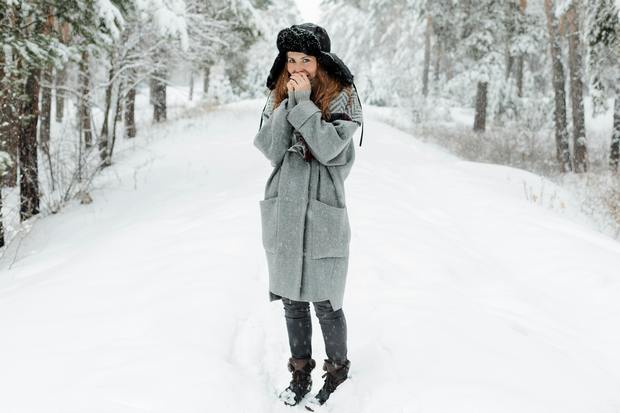
B) Weather
As a human being we should select such clothes that are not irritable for others. In winter we should pick warm, heavier, thick, insulated fabrics and bright colored clothes but for summer we should select sweat absorbing cool, soft, lighter, breathable and light colored clothes. In rainy season, we need such clothes as may dry up soon and are wrinkle free e.g., Lyocell, a natural material with low crease resistance. Climate change is now a practical factor in clothing selection too. Warmer average temperatures in many regions are shifting seasonal buying patterns, with consumers in traditionally cold climates purchasing lighter fabrics for longer portions of the year. This has had measurable effects on winter clothing sales across North America and Europe.
4. Physiological Factors
One person activity level, age graph, physiological condition, body structure may not match with others. These factors must effect on clothing selection. Physiological and psychological changes with time may impact on human fashion trend. Suppose for clothing selection an old man requirement and a small kid requirement, taste and choose may not same. Both people require different kind of clothes. This is particularly relevant in adaptive clothing, a growing segment designed for people with physical disabilities, limited mobility, or medical conditions. Features like magnetic closures instead of buttons, open-back designs, and stretch panels allow independent dressing without sacrificing appearance. According to the AARP and multiple occupational therapy associations, ease of dressing is consistently ranked as one of the top daily living priorities for older adults and people with mobility challenges.
Frequently Asked Questions (FAQs)
Q1. What are the main factors that affect clothing selection?
Clothing selection is influenced by four broad categories: social factors (such as gender, occupation, and culture), economic factors (income and affordability), environmental factors (climate and weather), and physiological factors (age, body type, and physical condition). Each person weighs these differently based on their own circumstances and lifestyle.
Q2. How does climate change affect what clothes people buy?
As average temperatures rise in many parts of the world, consumers are adjusting their seasonal wardrobes, buying lighter fabrics for longer periods and spending less on heavy winter clothing. Brands and retailers are responding by extending their spring and summer collections and investing more in breathable, moisture-wicking fabrics year-round.
Q3. Why do urban and rural people dress so differently?
Urban residents tend to have greater exposure to global fashion trends through media, retail access, and social mixing with diverse groups, which pushes them toward branded and western styles. Rural communities often have stronger ties to traditional and locally produced clothing, and practical durability tends to matter more than following trends.
Q4. How does income level influence clothing choices?
Income directly shapes how much someone can spend per garment, how often they buy new clothing, and which brands they consider. Higher-income consumers may prioritize brand names, quality fabrics, and tailoring, while budget-conscious buyers often focus on value, versatility, and durability per purchase.
Q5. What is adaptive clothing and who is it for?
Adaptive clothing is designed for people with physical disabilities, limited mobility, or medical needs. It includes features like magnetic fasteners, velcro closures, side-opening trousers, and seated-fit cuts that make dressing easier and more independent. It serves older adults, people with conditions like arthritis or paralysis, and anyone who finds standard garment construction difficult to manage.
Conclusion
Clothing selection is never driven by a single factor. Social background, income, climate, and physical needs all work together to shape what a person chooses to wear. Understanding these clothing selection factors helps both consumers make smarter choices and brands design products that genuinely serve the people wearing them.